TIforOA

Sanctify yourself through the permissible... Yevamos 20a

Divrei Torah to provide Chizuk in the struggle to balance spiritual and physical needs.

L'Iluei Nishmas Mirkah Bas Yosef


Monday, November 30, 2009

Depression means climbing into bed with a bar of chocolate


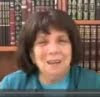
From a Shiur by Rebbetzin Heller

Depression means climbing into bed with a bar of chocolate.

Bitterness is like drinking some tea that someone put in salt instead of sugar, you would spit it out.

When you face problems that bother you, use the tool of bitterness and not the tool of chocolate(I mean depression).

Shira Smiles on Parshat Vayishlach


From a Shiur by Shira Smiles on Parshat Vayishlach


Kever Rochel represents the place of concealment from Hashem's ultimate goodness. In Kever Rochel even Hashem hides this truth from himself so that he can cry with us. Kever Leah reprsents the place where we can see with clarity that everthing Hashem does is for the good. Our job is to "visit" both. To cry for the Shecinah in Golus, but also to bask in the knowlege that everything is for the best.

Yes we live in a world with pain and tears, but it is also a place of Geulah.

We have to face all of our challenges with this approach.

A person's cure can come from his food.


From "For Today" Nov 30

Chance is the pseudonym of God when He did not want to sign. Anatole France

I was shopping in the market and I gave someone some money and he gave me some Breslov pamphlets. I put them aside to look at, and forgot them. I am lying in bed recovering from the flu and noticed one called "Get Well Soon". It was almost worth being sick just to bring me to read this pamphlet. The following is worth its weight in gold:

page 17- "get well soon"

A person's cure can come from his food. We see this in the verse, "Your food and water will be blessed and Hashem will remove disease from you midst" Ex 23.
When a person prays to Hashem then Hashem gives this person's food curative power so that he is healed and doesn't need any more medicine......
But when a person accustoms himself to pray to God, he can reach the point where he will be cured from disease by bread and water alone, and then all medicine is superfluous. The food he eats may also cure diseases within him of which he is unaware. This is because the power of prayer draws upon a person a special blessing from Hashem, making it unnecessary to rely on man made remedies.

How many people on OA report no longer needing many routine medicines? Is it really just the weight loss, or is it our closer connection to Hashem.

Sunday, November 29, 2009

Nobody knows what the door is going to open to tomorrow.


From a Shiur by Rebbetzin Heller
"To Worry or Not to Worry"
from Aish MP3

Rambam says that no one knows what is going to come in with the new day. We would all like to think that our lives will be without challenges and without difficulties. Our live can be lives of Simcha, but nobody has a life without difficulty. So how do we know what will happen when difficulties happen? What determines this is our relationship to the past and the present. You can not get out of your past by yourself. You have to ask Hashem to Help you.

We have to worry if our choices are right. If we make decisions without thinking them through very carefully we are liable to make a mistake.

Another worry that we have to have is are we the person that we are supposed to be. Did we use the potential that Hashem gave us.

Another worry that we have to have is did we cause quarrelling. The reason that we are tempted to start quarrels is our desire for truth. The way to do this is to respect the person if you do not agree with the persons opinion.

The ultimate way of losing our self is to focus on taking not giving. Something like taking a pen from work is worse then stealing something major because we will never do Teshuvah.

The first step in seeing goodness and wholeness is to at least not belittle.

When we confront bad we have to use it to reflect on how to become better and what message is this sending me. Then we have to personalize it.

All of our worries can be contained in one, Golus Haschichnah. The more that our hearts are involved in this worry the less we worry about the rest. We have to be open to wherever Hashem takes us because we never know what is going to help us bring out the best in ourselves. We have to be open to all opportunities.

Lets say you are having a lecture in a half an hour and the chairs did not come. You are beside yourself with worry. Now lets say that there is someone else who is responsible for the chairs, Evelyn. Its not your problem its Evelyn. Make Hashem your Evelyn for all of your problems. They are not your problems, they are Hashem's problem.

One of my biggest fears now is losing my abstinence. Like many others I dream about it all the time. This is a powerful tool for facing that fear, and many others.

"Abraham did not live to fill his stomach-he lived for truth."


From a Shiur on Aish MP3
"Discovering God Beyond Yourself"
by Rav Yitzchack Berkowitz

Rabbi Berkowitz discusses the different ways of accomplishing something. He asks, do you want practicality or do you want truth? He says that sometimes we are so focused on the practical goal that we forget the side benefits that we can get by doing something properly.

We tend to think that the less that we give the more that you have. But that is not what we live for-we live to give, and to connect with Hashem. Abrahams road to truth started with gratitude and selflessness. He taught the world that what is true and what is practical are two different things.

You don't hate yourself for having weakness, don't hate others for it either.

We are so subjective that we can only find truth if we are open ourselves to other's reality. To be sensitive to other people.

There has never been a Gadol B'Yisrael who was not a Gadol in loving his fellow Jew and caring. The road to truth is chesed. The road to God is Bein Adam L'Chaveiro.


There is so much here that applies to so many aspects of the program that I am going to let it speak for itself.

Watch Those Thoughts!


The Nature of Thought

The Baal Shem Tov taught, “A person is where his mind is” (Keter Shem Tov 56). The first thing is to be aware. Cease to take the mind and its designs for granted. It shouldn’t be left alone on “automatic.” Monitor everything that goes through the mind. We see how careful people are to keep their doors locked in order to make sure that no one steals, intrudes, or disturbs their home. How much more so should one keep a lock on the mind to prevent its attention from being stolen away to vanity, to keep bad ideas from intruding, to stop negativity from disturbing it.

From Rabbi Perets Auerbach’s “The Science, Art and Heart of Hitbodedut.” Explantory notes have been omitted from this online version. This work-in-progress may be purchased by contacting the author by email: peretsz@gmail.com. We thank Rabbi Auerbach for permitting us to present this and other excerpts from his writings here.

From the Blog- Solitude

A simple thought-- the more I stay out of the kitchen the better

Thursday, November 26, 2009

The Poor Me Syndrome


From an article in the Breslov Israel web site about Reb Shalom Arush's New Book "Chacmot Nashim"

http://www.breslev.co.il/articles/spirituality_and_faith/spiritual_growth/the_“poor_me”_syndrome.aspx?id=14397&language=english


Main issue number one: I was always feeling sorry for myself, and a bit ‘down’. I felt I had good reason to be, because of the issues having more kids, and the social isolation I felt that was causing.

Boy, was I wrong. Rav Arush writes a whole chapter about gratitude, and about how the main thing in life is to be grateful to Hashem for all the blessings He gives us. The trouble is, it’s much easier said than done. I’ve been trying, I really have, to just be grateful. But all my gratitude was always tinged with ‘poor me!’

In the book, Rav Arush suggests keeping a little exercise book, which you write down all the things to be grateful for. I started doing that a few days’ ago, and I’m already up to 150 things – I’ll write more about this another time, as it’s been extremely useful and insightful, and I’m genuinely starting to feel a lot more grateful and happy.


One of the most eye opening things about starting the program was when I realized that a glitch was not just a mistake in the Plan of Eating, but indulding in a session of "poor me" As my sponsor calls it, a pity party.

Wednesday, November 25, 2009

Parshat Vayetzei -The Greatness of Rochel


From a Shiur by Shira Smiles on Parshat Vayetzei

Rochel gave over the signs to Leah, but she did it in a way that Leah did not even feel the sacrifice that Rochel made. Fourteen years later when Leah said to her, "Its not enough that you took my husband, you also want to take some of my son's Dudaim" Rochel could have said, "your husband, he was mine from the start" but she didn't.

Shira Smiles quotes Rav Pam was asks, "how can Hashem be both chesed and emet, when they seem to be opposite traits?" The answer is that when Hashem wants to do chesed for us but we are not deserving of it he gives us an opportunity to do chesed which makes us deserve what he wants to give us. By keeping quiet when Leah said that, Rochel earned the zechusim to have a child.

When we are facing a very difficult nisayon that makes us feel like eating, we should remember that Hashem is giving us an opportunity to earn Zechusim.

Wake UP!


From a Shiur by Rabbi Lazer Brody "Wake up"

If we do not spend time at the end of each day reviewing our deeds and doing Teshuvah, how will we remember everything that we need to do Teshuvah for on Yom Kippur.

Every thing that we did a Chesbon Hanefesh for at the end of the day, Hashem forgives us and wipes the slate Clean and we do not have to face the consequenses for these actions in the future.

STEP 10:
Continued to take personal inventory and when we were wrong promptly admitted it.

Sunday, November 22, 2009

Focus on Your Grateful list

From a Shiur by Rabbi Lazer Brody. "Kosher Humor".

One of the most powerful tools of the Yetzer Harah is to mach you focus on the bad instead of the good. Haman is a perfect example. He was not happy with everything that he had because Mordechai would not bow down to him.

That is why it is so impotant to focus on all of the things that we need to thank Hashem for.

Thursday, November 19, 2009

Let go of your expectations-so that you have no resentments


One of my favorite quotes from the big book is:
Let go of your expectations-so that you have no resentments

I find this to be such a powerful thought that I have it hanging on my desk at work.


Today I was listening to a Shiur by Rabbi Lazer Brody, "Emunah with Love" and he said that the best barometer of our emunah is how much hate and resentment we have inside. If we have real emunah we will understand that everything comes from Hashem so that there is nothing to be angry about.

Tuesday, November 17, 2009

Parshat Toldos-Shira Smiles


From a Shiur by Shira Smiles on Toldos

http://www.naaleh.com/viewclass/2312/single/

Yakov came out holding Esav's heel to teach us that life is about struggle and growth. We have to grasp onto the good in life and hold on and grow. Yakov and Esav were twins, they had the same potential but Yakov didn't let go of growth, and Esav felt that he was "Asui" already made.

If we don't work hard to reach our goals we will not get there.

Saturday, November 14, 2009

Don't let difficulty turn you away from something


More from the Shiur by Shira Smiles on Chayei Sara

http://www.naaleh.com/viewclass/2294/single/

When Rivkah went to draw water the water came up to her because of her kedushah. When she went to draw water for the camels, the water did not come up to her and she had to work hard to bring the water up.

We learn from this that sometimes when we do a mitzvah it becomes more difficult, not less. We should not allow this to keep us from completing what we started. We should understand that the difficulty is part of the growth process. Sometimes we are tempted to think that because it is difficult it is not meant to be, but we should not think like this. We have to know to persevere and keep trying and we will get even more reward.

Sometimes when we first start controlling our compulsive eating it is easy, in part because of the excitement of being in control. After awhile it seems to get more difficult, but we should not give up. This is part of the process.

Friday, November 13, 2009

Importance in the details


An interesting exchange of letters to and from Rabbi Lazer Brody about the importance of details. Next time I am putting back 3 grains of barley to make the weight perfect and I wonder about details this is a good thing to keep in mind.

Dear Rabbi,

Why does the Jewish religion seem to fuss over insignificant details? How much matza do we have to eat, which spoon did I use for milk and which for meat, what is the right way to tie my shoelaces? It seems to me that this misses the bigger picture by focusing on tiny trivia. Is this nitpicking what Jews call spirituality? I actually already sent you this question over a week ago and didn't receive a reply. Could it be that you have finally been asked a question that you can't answer?! Signed, Rob

Dear Rob,

I never claimed to have all the answers. There are many questions that are beyond me. But it happens to be that I sent a reply the same day despite the fact that I've been away from home on a rigorous speaking tour in the USA. The fact that you didn't receive it is itself the answer to your question. You see, I sent you a reply, but I wrote your email address leaving out the "dot" before the "com". I figured that you should still receive the email, because after all, it is only one little dot missing. I mean come on, it's not as if I wrote the wrong name or something drastic like that! Would anyone be so nitpicky as to differentiate between "yahoocom" and "yahoo.com"? No, it's not ridiculous. Because the dot is not just a dot. It represents something. That dot has meaning far beyond the pixels on the screen that form it. To me it may seem insignificant, but that is simply due to my ignorance of the ways of the web. All I know is that with the dot, the message gets to the right destination; without it, the message is lost to oblivion.

Torah observance and mitzva fulfillment contain a world of symbolism. And every dot counts. When the mitzvot are performed with precision, a spiritual vibration is emailed throughout the universe, all the way to G-d's inbox. If you want to understand the symbolism of the dot, study cyber tech. If you want to understand the symbolism of Judaism, study Torah. Yours always, LB

Wednesday, November 11, 2009

Humility is the Key to recieving Torah


From a Shiur by Shira Smiles on Parshas Chayei Sara

http://www.naaleh.com/viewclass/2294/single/

When Eliezer came to look for a wife for Yitschak he brought tremendous riches and he could have been mistaken for Avraham. The first thing he said was, "I am Avrahmam's servant" We learn from this the importance of humility. He does not want praise that is undeserved. He clearly learned this from Avrahm. Rav Lugasi says that if you translate this into action you will have success. If you do not have humility, you will not have humility before Hashem, and you will not be able to grow.
Related Posts with Thumbnails