TIforOA

Sanctify yourself through the permissible... Yevamos 20a

Divrei Torah to provide Chizuk in the struggle to balance spiritual and physical needs.

L'Iluei Nishmas Mirkah Bas Yosef


Showing posts with label Parsha. Show all posts

Thursday, March 14, 2013

Keeping a clean Neshamah.

The Dos Zakainim explains that the reason every korbon must be brought with salt is to remind us that just as salt is a preservative that allows food to last longer, so too the sacrifices are permanently ours to cleanse us from our sins.

He then explains why this concept is crucial. If a man sins and gains atonement from that sin, he is clean and will then be guarded against committing the sin again. However, if he couldn’t become purified, once he sinned, he would repeat the act over and over again. It can be compared to man with a beautiful white garment. When he first puts it on, he is careful to maintain its pristine condition. Once his garment becomes soiled, however, he is no longer careful about avoiding additional stains. So, too, if a man sinned and that sin remained with him, he will continue committing that sin over and over again. This is the concept that “Once a man sins, the sin becomes ‘permitted’ to him.” That is why the Torah gave us the process of teshuvah.

From the Shmuz on the Parsha

Thursday, February 3, 2011

Why does Hashem want us to build a Miskan?

 Why does Hashem care about a physical thing?  To teach us that the source of everything is Hashem.  To teach us not to see the physical world as being separate from the spiritual world.  We may be tempted to think that the physical world is unrelated to the spiritual world, but in actuality, the whole world is connected to Hashem.

from a Shiur by Rabbi Kirzner on Aish.com about Parshat Terumah

Friday, January 21, 2011

Taking Mitzrayim out of ourselves.

"And the Children of Israel said (to Moshe and Ahron), 'would that we had died by the hand of HaShem in the land of Egypt when we sat by the pot of meat, when we ate food to fullness," (Shemos, 16, 3).

"And Moshe and Ahron said to the Children of Israel, 'even then you will know that HaShem brought you out from the land of Egypt," (Shemos 16, 6).

This verse is teaching us that by providing the quail and Mahn in response to their fear of hunger in the desert, the Jewish People will know that HaShem is the One solely responsible for their salvation. But why is food used as the vehicle to deliver this essential lesson that serves as a fundamental cornerstone of Jewish doctrine? And why is their fear centered around their previous eating habits in Egypt?

Surely the wilderness of the desert could have easily prompted other concerns causing anxiety for the Jewish People (wild animals, lack of shelter, etc . . .). Why were they focused on the food, and what's the lesson HaShem is trying to teach us through this episode in the exodus from Egypt?

The commentator Seforno offers a powerful and penetrating insight. He explains that Moshe prayed that when HaShem responds to the nation's request for food, He should provide their sustenance on a nightly basis, exactly enough for that evening (no more and no less). And through this manner of provision, the Jewish People will know that HaShem is taking them out of Egypt - not just taking the Jews out of the land of Egypt, but taking Egyptian attitudes and behaviors completely out of the Jewish People.

For they yearned to return to the gluttonous ways of Mitzrayim, which was always having a pot of meat at their side, continually grazing like an animal, with no proper boundaries and guidelines in their relationship with food. They were likened to chickens constantly pecking at garbage, demeaning and debasing themselves just for another morsel of this, or bite of that.

This continued until HaShem's servant Moshe instilled the concept of set times for meals - teaching them to behave like mentchen (proper human beings) when it came to eating - having proper portions and proper times. This, the Seforno says, is the explanation of these verses, about how HaShem didn't just take the Jews out of Egypt, but took Egypt out of the Jews.

How can we deny this clear and graphic lesson? When we run from shul to shul hoping to chap another slice of cake here, or piece of kugel there, are we not enslaving ourselves back to Egyptian culture, ascribing importance to their sets of mores and values? Is this the Jewish way to have a holy and healthy relationship with food? Are we really being kadosh at a kiddush?

Is this the example to set for our children - to eat whenever we feel like it and whatever we want, like a cow grazing in a field or a chicken pecking at garbage? We're instructed to remember and relive the exodus from Egypt every day. It doesn't have to be just theoretical. Good שבת

from a Sovea Newsletter

Monday, November 1, 2010

Always strive to reach greater heights.

In Parshat Toldot we read how Yitzchak and Rivkah both prayed to Hashem for a child. Rashi explains that Hashem listened to Yitzchak over Rivkah because one cannot compare the prayer of a son of righteous
parents to the prayer of a daughter of evil lineage. Yet Chazal teach that baalei teshuva are ranked greater than tzaddikim. They also teach that Hashem listens to all who call out to him in truth. What made Yitzchak’s prayer greater than Rivkah’s?

Rav Dessler explains that Yitzchak could have easily continued along the path of Avraham. Instead he worked hard to forge his own path in avodat Hashem. He was not content to follow a routine. Instead, he
invested enormous effort to make gevurah, self discipline, his own way of serving G-d. In this way he was greater than Rivkah, who simply moved from outright evil towards righteousness. This is one of our greatest
challenges. A person should not be satisfied with the level he has reached, but should constantly strive to reach greater heights in serving Hashem.

Parshat Toldot: Potent Prayer

Based on a Naaleh.com shiur by Mrs. Shira Smiles

Tuesday, October 26, 2010

Lifting ourselves out of an earthen existence.

A person can become earth like, stuck in one place, or a person can take nisyonos and elevate them self.  When Ephron sold Avraham the Maarat Hamachpala, he could have inscribed himself forever as a Tzadik who gave him the land, but instead he gave into his baser instincts and sold it to Avraham for a lot of money. When we face a difficult nisayon we have to realize that we are being given an opportunity to lift ourselves up.  That our actions will influence our future.  We should always strive to be a giver, not a taker. 

from a Shiur on Naaleh: Parshat Chayei Sarah    Teacher: Mrs. Shira Smiles

Thursday, October 7, 2010

Don't give up.

There are often times when we feel far from Hashem and we don't feel that we can even approach Hashem, our job at those times is to take that darkness and turn it into a prayer to Hashem.

We say, "Hashem, I am so distant from you that I can't even daven to you, please make an opening for me."

This prayer will have tremendous strength, and help us very much.

Often when we force ourselves to make a small step in the right direction, Hashem helps us to move much further.  We learn from this that when something feels hopeless we don't have to contemplate whether or not we will succeed, we just have to take the next step.

If Noah had davened to Hashem to save the world, he might have actually saved the world, but he thought it was hopeless, so he didn't even try.  We have to try even when it feels hopeless.

from the Shiur on Naaleh:
Parshat Noach: Wonderful Words


Teacher: Mrs. Shira Smiles Class: Parsha Topics 5769

Tuesday, October 5, 2010

Don't let yourself slide down the Slippery Slope .

Why did the sins of robbery and adultery lead to the destruction of the world in the time of Noach? The answer is that even though there may be sins that seem much worse, when we ignore the breakdown of societal norms, the end of the story is total societal breakdown. We have to learn from this that when we look at ourselves, are we allowing ourselves to slip a bit here and there? We may think that it is not important, but in the long run, it is the small infractions that lead to a total breakdown and destruction of our own being.


from a Shiur on Naaleh:
Parshat Noach: Slippery Slope Teacher: Mrs. Shira Smiles Added: October 04, 2010
Posted by Picasa

Sunday, October 3, 2010

Beginning the year right.

The Chazon Ish says that one of the possible meanings of the "Tree of Knowledge" is a grape vine. Hashem had intended for man to drink wine for Kiddush from the Aitz Hadaas. Since the first time that man would have had wine was on Shabbos, his neshamah yiseira (extra soul) would have helped him to deal with the internalization of evil. We learn that the first time that something happens is a sign of how it will happen in the future. Therefore, if man had just waited until Shabbos to eat from the "Tree of Knowledge" it would have been entirely different.

This year we are beginning the year off with the advantage of the neshamah yisera. May it be a beginning of a year with extra strength and insight.
Posted by Picasa

Wednesday, July 21, 2010

Understanding Va-etchanan

We owe Hashem such a debt of gratitude that we can never ask Hashem for something based on our good deeds.  Even a tzadik can not assume that they have so many mitzvot that Hashem will answer their Tefilos.  So how do was ask, "for a matnat chinam"  for a free gift, so that we will have what we need to do mitzvot in the future. 

Moshe Rabenu asked Hashem to let him go into the land of Eretz Yisrael based on his desire to do Mitzvot in the future.  He asked "V'Etchanan" as a free gift based on Hashem's mercy not based on deserving it.

When we ask Hashem for a gift, we have to have in mind that all I want to do is Ratzon Hashem with the gifts that he gives us.

Based on a Shiur on Naaleh: The First Rashi

Teacher: Mrs. Shira Smiles Class: Chumash in Depth: Va-etchanan: Moshe's Prayer

When we daven to Hashem to keep us abstinent we have to have the right intention.  That we should be healthy and able to do Ratzon Hashem, not so that we can be skinny.

Sunday, June 20, 2010

Life in the desert.


Why did Hasehem send serpents to klal Yisrael in the desert? Because they stopped apreciating all of the miracles that he provided them on an ongoing basis and they started complaining. Hashem removed his protection from them for a small time and all of a sudden they became aware of all of the dangers that Hashem was protecting them from.

Any kind of problem in our life is a wake up call from Hashem, it is a way of reminding us that the only salvation comes from Hashem.

In our lives we face tremendous dangers on an ongoing basis but we do not appreciate the many ways that Hashem protects us. If we are ungrateful, Hashem sends reminders for us to appreciate what we have.

from the Shiur:
Parshat Chukat: Serpents Scream
Teacher: Mrs. Shira Smiles Class: Parsha for Our Lives 5770

Imagine if Hitler had been killed before he rose to power. We would never have known what we were saved from. We do not know all of the many things that Hashem saves us from. We have to work on increasing our gratitude.

Thursday, June 10, 2010

The beauty of Change.

Why is it that some people want to change, and they can't. The reality is that we have this notion, that at some point I am going to change but not yet. Unfortunately we keep putting it off and developing more bad habits. If we want to change don't wait for later-it may be too late.
People who can change feel in charge of their lives, it is a wonderful experience and it is exhilarating and brings you closer to Hashem.
Naaleh: Parshat Korach: Well Grounded
Teacher: Mrs. Shira Smiles Class: Parsha for Our Lives 5770

I can personally say that I kept putting off doing something about my compulsive overeating, saying some day I'll change. Now I look back and say, "Why did I wait so long" Baruch Hashem it was not to late. Now that I have changed so much I am so grateful for how much better my life is.

Korach's Jealousy

The sin of Korach came from jealousy. The problem with jealousy is that you are so consumed with thinking about others that you do not focus on developing yourself. If we do not develop ourselves it is as if we do not exist, and such a person lives his life without becoming what they are supposed to be.

from the Shiur on Naaleh: Parshat Korach: Well Grounded Teacher: Mrs. Shira Smiles Class: Parsha for Our Lives 5770

One of the most important things that I have learned from following OA is to stop blaming others, and to look for a solution inside of myself
I heard a geat thought on this at a meeting. One of the most important reasons that people lose abstinence is jelousy of other peoples ability to eat whatever they want.


.

Tuesday, June 8, 2010

Korach questioned the authority of Moshe Rabenu

When Korach questioned the authority of Moshe Rabenu he thought that he knew more then Moshe. We learn from this that if we have a question about something we are learning it is important to act from humility and admit that we do not understand, rather then thinking that we know better.

from the Shiur on Naaleh:
Parshat Korach: Well Grounded
Teacher: Mrs. Shira Smiles
Class: Parsha for Our Lives 5770

Tuesday, May 25, 2010

Looking for the Yad Hahsem in our lives.

When Benei Yisrael where in the dessert they never knew when they would have to move their camp.  Hashem would send them a sign and they would have to move on.  It didn't matter if they liked one place better then another, sometimes they stayed in a place for a short time and sometimes for years.  Despite this they never complained. In our lives we have times of ease and times of trouble.  We have to know that it is all coming from Hashem.  Life is not always about movement, there are times when just handling the nisyonot that Hashem has given us is a time to hold on to our emunah and keep in one place.  In the dessert it was clear what Hashem wanted us to do, our challenge for this generation is to see Hahsem's message in our own life.  If we look for the hand of Hashem, we will see it, but if we don't look, we will never see it.  Often we can only see Hashem's hand by looking back at the events of our lives.  A good way of seeing the hand of Hashem is to make an effort to tell stories of Hashgacha Pratis.
Parshat Beha'alotcha: Triumphant Travels

Teacher: Mrs. Shira Smiles
Class: Parsha for Our Lives 5770
Added: May 25, 2010

Friday, May 21, 2010

It is a true wonder when the physical and spiritual are both working together.


Why does a Nazir bring a sin offering after he finishes his period of abstinence from Wine? Is it because he did something wrong by abstening from the physical world? No it is because he reached a high level by exercising self-control, and now that he is returning to the physical world he brings a sin offering.

The nazir has a problem, he knows that he can not balance they physical and spiritual world corectly. He knows that he needs extra help to create this balance by putting limits on himself to try to create a place where integration is a reasonable goal. Since there is concerne that he should not fall back into the weakness and overdo the world of desire, he has to create an extra boundry, the sin offering to build him up and prevent a further fall.

This is the reason that the Torah portion Naso talks about the Sota, and the Nazir. They both come from the lopsided relationship between the physical and material world. If a person witnesses a Sota he should take it as a message that he needs to realign the relationship between the physical and the spiritual in his own life.

The Nazir is refered to as a "Pella" (wonder) because he was able to control his desires. The relationship between the Guf (body) and the neshamah (soul) is also considered to be a pella. That is the reason the the blessing of Asher Yatzar says "Mafli Laasot". Becuase it is a true wonder when are physical and spiritual are both working together.

from the Shiur:
Naso: Holiness Through Self-Control # KY 035 A
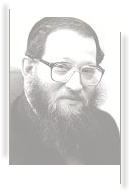
by Kirzner ztl, Rabbi Yitzchak

The response to seeing an unfaithful woman's punishment was to become a Nazir - abstaining from wine, haircutting, and various other things to preempt him from following the same path. But wouldn't we assume the reaction to witnessing such gruesome consequences would in itself be a deterrent? Rabbi Kirzner discusses the far ranging effects what we see has on us, and the Nazir's underlying lack of appreciation of physical and spiritual synthesis.

Thursday, May 6, 2010

The pursuit of Shlaimus

The pursuit of happiness is not a Jewish value, the pursuit of Shlaimus is.
from the Shiur "Parshat Behar & Bechukotai: Rewarding Reward "

Teacher: Mrs. Shira Smiles Class: Parsha for Our Lives 5770

Running after physical pleasures will not make us happy, it will just make us want more pleasure.  True pleasure comes from Shlaimus. As Luzato says: the only true Shlaimus is Devakus with Hashem.

Following all of Hashem's mitzvot on his terms

Why does the Torah say, "Im Bechukotai Talek"  when it is referring to all of the mitzvahs and not just the Chukim. Because our goal is to follow all of Hashem's mitzvot on his terms, not our terms.  We need a purity of spirit that will allow us to follow Hashem's will simply without our own agenda.

Parshat Behar & Bechukotai: Rewarding Reward

Teacher: Mrs. Shira Smiles Class: Parsha for Our Lives 5770

Hashem wants us to do the mitzvot without thinking what we think will be best for us.  The more that we are able to do the right thing without figuring out what we really want to do, the more successful we will be in life, and in program.

Thursday, April 22, 2010

Each day is a new beginning and new opportunity.


This is the history of the heavens and of the earth when they were created, in the day that the L-rd G-d made the earth and the heavens (Bereishis 2:4)

Hashem created the world with the letter "Hay", leaving two open portals, at the bottom and at the side. Man's natural inclination is to strive to rise. If he succeeds, he can enter through the wide door at the bottom of the "Hay'. Should he, however, stray, he need not fear, for there remains yet another chance, and he can squeeze through the small opening at the side.

Man is not perfect. At the time of creation, Hakodosh Boruch Hu already made provision for the weaknesses of humanity. He created opportunities for man to rise above his failings.

Despite what has previously transpired, I need never despair. Each day is a new beginning and new opportunity.

Tuesday, April 20, 2010

The real root of Yiras Shamayim


The real root of Yiras Shamayim is fearing Hashem in private. We have to be able to tell the truth in the deepest recesses of our heart. Doing Mitzvot in public but not is private is real apikorsis, we have to remember that Hashem always sees us no matter where we are.
from the Shiur:
Parshat Acharei Mot & Kedoshim: Respecting the Respected
Teacher: Mrs. Shira Smiles Class: Parsha for Our Lives 5770
Added: April 19, 2010

What we do and think in private is what really defines who we are. We can not grow without total honesty. We can pretend to work the tools of OA, but if we want success, we need honesty.

Thursday, April 15, 2010

Humility brings Bitachon

If a person has doubts about Hashem, don't work on your doubt, work on your humility. Hashem says that a haughty person can not live in the same world with Hashem.  This means that a haughty person is in a black hole that causes doubts.  If a person is humble, they will see the greatness of this world and all of the good that Hashem created. Real humility means that you recognize your greatness, but you also recognize that it comes from Hashem.


from the Shiur:
Parshat Tazria & Metzora: Profound Purity

Teacher: Mrs. Shira Smiles Class: Parsha for Our Lives 5770

As I walk around looking like a new person (half the size), people stop me to make a fuss.  It is important to remember that it was not me.  I never could have lost this weight by myself, it is not me, it is only because Hashem helped me to find OA and become abstinent and stay that way.
Related Posts with Thumbnails