TIforOA

Sanctify yourself through the permissible... Yevamos 20a

Divrei Torah to provide Chizuk in the struggle to balance spiritual and physical needs.

L'Iluei Nishmas Mirkah Bas Yosef


Showing posts with label Rebbetzin Kalmonovitz. Show all posts

Tuesday, March 6, 2012

At the Purim Seudah we are on a higher madregeh then at Neilah of Yom Kippur.


I went to a Shiur last night by Rebetzin Kalmonovitz last night  who said that at the Purim Seudah we are on a higher madregeh then at Neilah of Yom Kippur.  Hashem opens gates that are not open at any other time of the year.  Hashem forgives us for things that we did not do Teshuva for, and for things that we did intentionally, as long as we are filled with the Bitachon that everything that Hashem does is for the best (like in the story of Mordechai and Esther).  This is the reason for wanting to be in a state that we dont know the difference between Bless Mordechai and Curse Haman.  In the end, whatever happens is for our best, so even the seemingly bad is really a blessing.

Tuesday, November 29, 2011


In a Shiur by Rebbetzin Kalmonovitz she said that Hashem gets tremendous Nachas from us telling stories of the Tzadikim becuase it inspires us to improve ourselves.  Therefore I am posting this from:
http://www.JewishWorldReview.com |

  Two reporters, Israel correspondents from international secular publications, called the other day. Each was seeking the "truth" about supposed controversies within the fervently-Orthodox world.
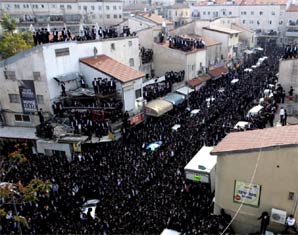
I told both the same thing: Stop wasting your time on fringe groups and trivial issues. If you want to understand the "ultra-Orthodox" community, first find out why over a 100,000 people attended the funeral of Rabbi Nosson Tzvi Finkel, with tens of thousands of adults sobbing openly and unashamedly. If you want to understand a person or a community, observe what he or they honor: "[A] person [reveals himself] according to what he praises" (Proverbs 26:21).
Who was the remarkable man whose passing inspired such grief?
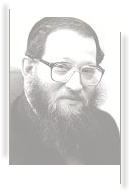
When Rabbi Finkel took over the reins of Jerusalem's Mirrer Yeshiva from his father-in-law, Rabbi Beinish Finkel, zt"l, in 1990, he had already been diagnosed with Parkinson's Disease. Many wondered how he could carry the burden of a yeshiva (rabbinical academy) that numbered 1,000 married and unmarried students. Yet under his leadership the yeshiva expanded rapidly. New buildings were built; another branch was started in a community outside Tel Aviv. One sage quipped that Rabbi Nosson Tzvi might as well put a roof over the entire neighborhood and call it Mirrer Yeshiva. Today, 6,000 students learn in Mirrer Yeshiva's many study halls, making it the largest yeshiva since the closing of the Talmud, perhaps the largest ever.
"Even when I lie down, I can't rest because of the trembling," from Parkinson's Disease, he told one of his brothers-in-law, "so I think of ways to spread Torah." Our Sages say that the Ark carried those who carried it. And so it was with Rabbi Nosson Tzvi. After one long flight to Los Angeles, a crying stewardess told those who came to the airport to meet him, "Promise me you'll never let him do this again. How could you do this to this holy man?" When people accused his brothers-in-law of "shlepping him" on grueling trips, they replied, "We don't shlep him, he shleps us."
He used his debilitating disease to build more Torah and to teach. A rich businessman refused his request for a large donation. "I can't," he said. The sage told him, "I can't either, but I do anyway." He received the donation.
THE SAGE AND THE CEO
Howard Schultz, the founder of Starbucks, was once was brought to see Rabbi Finkel, along with a group of prominent businessman. They had not been told of his Parkinson's, and instinctively averted their eyes when he entered the room. Soon they heard a bang on the table and Rabbi Nosson Tzvi commanding them, "Look at me." "I know you are all busy men," he continued, "so I'll be brief. What is the most important lesson of the Holocaust?"

He proceeded to describe the situation of the Jews arriving in Auschwitz and other death camps, after being packed into cattle cars for days, without water or facilities of any kind, and then being separated from their loved ones. When the lucky ones reached a barracks, they were given one blanket for six people. They could choose to share it or each one could try to grab it for himself. They chose the former. "The greatest lesson of the Holocaust," he concluded, "is the triumph of the human spirit. Now, each of you return to America and share your blanket with five others."


Someone once asked him for advice on how to learn Torah, even amidst afflictions. Rabbi Nosson Tzvi told him that he didn't know: "I learn with great simcha [joy]." He refused to take the strongest medicines to control his disease for fear they would cloud his mind or rob him of his memory. The sage often learned in a freezing room to be able to meet his daily quotas in learning.

When he mounted the podium in Mirrer Yeshiva to give a lecture in the main study hall, he had to hold fast to two shtenders (lecterns) to remain upright and he never knew whether he would be able to control his tongue sufficiently to speak. Once he was thrown by a violent tremor from his position lying on a couch onto the floor, in the middle of learning with a student. Even before he could be helped up, he was asking his study partner to repeat the interpretation he had been offering.
Just as one would not begrudge the money spent to ransom a loved one, he viewed his ordeals as trivial price to pay for teaching and building Torah, and not as self-sacrifice. Everywhere he went, people of all ages rushed to be within his four cubits and witness a soul that had so transcended the limits of the imperfect vessel of his body.
OUR SAGES GIVE several possible explanations for the tests with which a tzaddik ( saintly person) is afflicted. Sometimes those tests serve to actualize his potential; sometimes to publicize his greatness. I will never forget the first time I saw Rabbi Nosson Tzvi, over thirty years ago, at the wedding of a former student. I had no idea who he was, but I could not take my eyes off of him. A Mona Lisa smile did not leave his lips the entire time I watched. It conveyed goodness and love and joy in a student's lifecycle event. I asked someone, "Who is that man who looks like an angel?" The special qualities were already there.

NATTIE, THE CUBS FAN
With love he inspired thousands of young men to reach heights that they never dreamed possible. In Mirrer Yeshiva, under Rabbi Nosson Tzvi, it did not matter where you were from, your family connections, or how high your IQ: Rabbi Nosson Tzvi was prepared to help each student reach his potential. He never forgot that he arrived at Mirrer Yeshiva, a lanky teenager called Nattie from a coed Jewish high school in Chicago, wearing a Cubs hat (though, he quipped, the golf clubs were left behind.) From his days as a young newly wed until he was felled by a sudden heart attack, he made it a practice to establish study sessions with any student who requested one.

A senior sage several decades Rabbi Nosson Tzvi's senior once came to visit him. Despite Rabbi Nosson Tzvi's protests, the older scholar insisted it was incumbent upon him to visit someone who knew 3,000 students by name. "I'm not sure if I know each one by name," Reb Nosson Tzvi said, "but I love each one." All those who entered the Mir found out that it was true.
A ba'al teshuva (one who reclaims his heritage through observance) recently arrived in Mirrer Yeshiva from Ohr Somayach could not find the special penitential prayers in an unfamiliar prayerbook. His humiliation was rising by the second, until Rabbi Nosson Tzvi, who had somehow noticed his discomfiture, came rushing over with a siddur open to the proper page. Such stories are legion: Rabbi Nosson Tzvi checking on young disciples in their sealed rooms during the Gulf War; Rabbi Nosson Tzvi personally taking a lad who fainted in a lecture to a doctor and then insisting that he move into the crowded Finkel home; Rabbi Nosson Tzvi looking for an apartment to rent with a student about to be married; Rabbi Nosson Tzvi, just back from a fundraising trip abroad, crying at the beginning of his Friday Chumash (Bible) class because "I missed you all so much."
Those who were sure the sage would not remember them from years before in the yeshiva were astonished to be greeted as "My Chaim," in a long receiving line, or to be reminded of a difficulty they had posed to the sage a decade earlier. Some sought to avoid imposing on Rabbi Nosson to officiate at their weddings, which entailed him arriving in a wheel chair and being assisted by at least two others to the chuppah. To no avail. Inevitably they would receive a call in the middle of wedding that the Rabbi Nosson was outside and wanted to wish the new couple Mazel Tov. A former student from America begged him not to attend his son's bar mitzvah at the Western Wall. "I missed your wedding fifteen years ago; I'm not missing the bar mitzvah," Rabbi Nosson Tzvi told him.
"Not a blade of grass grows unless an angel strikes it and says, 'Grow," our Sages teach. Rabbi Nosson Tzvi was that angel for tens of thousands of students and dozens of promising young scholars whom he appointed to give classes in Mirrer Yeshiva. But above all, it was his smile, the way he grasped your hand in both of his.
Mendy entered Mirrer Yeshiva after an indifferent career in other rabbinic schools. But Rabbi Nosson Tzvi was always ready to provide another chance. Towards the end of a long five-month winter zman (semester), the sage announced that he would like the unmarried students to commit to studying Talmud 12 hours a day, without any breaks. It never occurred to Mendy that the sage could mean him. A few days later, Mendy was approached and asked why his name was not on the sign-up.
Mendy could not believe that he had noticed the absence of his name among hundreds of names. But when he saw the Rabbi Nosson Tzvi was serious, he too signed up. The first days were very difficult. But after dropping into bed exhausted on the third night of the new regime, Mendy found himself dreaming about the Talmud in his sleep. The next morning he told this surrogate father what had happened. Rabbi Nosson Tzvi started dancing with him spontaneously in the packed study hall.
Now you know why we are weeping.

Thursday, June 30, 2011

Rebbitzen Kalmanowitz - Chovos Halevavos Shiur in Monsey

Every Wednesday at 10:45 at 6 Ash Steet this summer.  For more info contact tioablog@gmail.com.

Thursday, November 18, 2010

Fighting the idols of our time

When Benei Yisrael were in Mitzrayim they had to tie a lamb to the bedpost.  This was a major act of defiance because it was the Avodah Zarah of the Mitzrim.  In our times we have to fight the avodah zarah of secular society, whether it is "Hello Kitty" or other pop figures.

from a Shiur on Kol Haloshon by Rebbetzin Kalmonovitz

Monday, September 6, 2010

How can we tell what our tafkid in this world is?

The Chofetz Chaim explains a way of knowing how we can know what our tafkid, our role in this world is supposed to be.  He says that when a soldier goes out to war he can look at the tools that he was given and know what he is supposed to do.  If he was given pots and pans, he knows that he is a cook, and if he is given weapons, he knows that he is a soldier.  In our lives we have to look at what tools Hashem has given us and  from that we can know what is expected of us.

from a Shiur by Rebbetzin Kalmonovitz

Rebbetzin Kalmonovitz speaking tonight in monsey

at 8:00 on Ash.  For more info email me at tioablog@gmail.com

Thursday, August 12, 2010

Spiritual Housecleaning.

Never underestimate the value of even a thought of Teshuvah.  When you walk into a very dirty and messy kitchen you may want to feel overwhelmed and walk out, but if you did you would never have a clean kitchen.  You just have to make a start, take out the garbage, or clean a dish  That one act gets you into the swing of things and you will continue in the right direction.  It is the same way with Teshuvah- just get start- don't feel overwhelmed.
Heard in a Shiur by Reb  Kalmonovitz

A small step can make a big difference.

Just like a big sin begins with a small step in the wrong direction,
a small step in the right direction can bring major Teshuvah.

Koneh Olam b'shaah echas- We can acquire worlds in one hour- can also mean that in one second of turning aside from the wrong thing we can acquire worlds.

heard from a Shiur by Rebbetzin Kalmonovitz

Showing that we care about others.

Today I had the opportunity to ask Reb. Kalmonovitz a question that has been bothering me for a while.  When a person accepts something as being from Hashem, it feels like you are becoming less caring.  She answered that it is just the opposite.  You don't care less, you should care more, but instead of occupying your thoughts with the problem, you are occupying your thoughts with davening to Hashem that this problem should be solved.

Tuesday, August 10, 2010

A peron's mouth determines his kedusha

He has to watch what goes out of his mouth-tefilah, learning and shmirus haloshon, but he also has to watch what goes in-his achilah-eating.  Our eating  has to be with the right intentions. A peron should eat for his needs not his desires and that will elevate his kedusha.

from a Shiur by Rebbetzin Kalmonovitz on eating.

Thursday, August 5, 2010

The right mindset.

Every action that we take at any time gives us the opportunity to do a mitzvah.  If we have the right mindset, even the simplest actions can be mitzvot.  Everyone get up in the morning and get dressed.  If we have the mindset that we are getting dressed so that we can go and daven, or take care of our family, so that we can do more mitzvot, we are doing a mitzvah just by getting dressed.

heard in a shiur by Rebbetzin Kalmonovitz today in Monsey

Elul is a time of renewal.

If we increase our actions, our good deeds, Hashem will open up a door for us to Rachamim and Ratzon.  If we stretch ourselves in our actions beyond our means during the month of Elul, Hashem will help us to internalize what we have accomplished during the month of Tishrei. 

We should not waste the opportunity that Elul offers us to start fresh and to go in the right path that takes us on a path the leads us through Rosh Hashanah, Yom Kippur, Sukkus and all the way to Simchas Torah.  We have an opportunity for growth and we should not waste it.
heard in a shiur by Rebbetzin Kalmonovitz today in Monsey

Using the gifts that Hashem gives us.

Rabenu Yonah brings down that a person should do Teshuva at every meal.  He says that you should take that opportunity to reflect on what you have done since the previous meal.  If you did any aveiros you should do Teshuva and you should thank Hashem for all of the positive things that you did.

Rebbetzin Kalmonovitz explains that the reason that our meals are the appropriate time to do Teshuva is that at every meal we are receiving the gift of food from Hashem.  This food gives us energy.  If we use this energy to do good things then we are using this gift the way that Hashem means for us to use it.  If, chas v'sholom someone uses this gift, this energy,  to do something wrong, we are taking Hashem's gift and perverting it.

If we live our lives like this, always doing Teshuva at every meal, and reviewing our lives at every meal, we will live in a constant state of Teshuva.

Heard in a Shiur by Rebbetzin Kalmonovitz in Monsey today

Sunday, July 25, 2010

Look for the pure neshomah in your spouse.

Tu'Av is a time of Shiduchim. In light of this I want to share an insight about marriage that Rebbeztin Kalmonovitz told me.  Every person is really only half of their true neshamah, their spouse is the other half.  This might be an upsetting thought at times when we are frustrated with our spouse (which every person experiences at some time).  The way to appreciate this reality is to realize that after we leave this world and go to the world of emes, we will go through a process of spiritual purification, and so will our spouse.  Then our souls will be reunited in their pure states.  Look at your spouse and say to yourself, "there is a pure neshomah inside of him/her that is part of my neshomah" 

Thursday, July 22, 2010

Claiming our Reward

There was once a lottery in NJ that kept getting bigger and bigger until it reached $41 million dollars.  When they announced the winning number, no one came to claim it. Week after week, month after month, still no one came forward to claim the prize.  It was decided that if no one came to claim the prize, then the city where the ticket was bought would get the money.  The city was so excited at the expected winfall when suddenly the night before it would go to the city a letter came in claiming the prize.  When they asked the winner, "why did you put off claiming your prize" he said , well I was busy with this and that and I figured I would get around to it soon, then before I knew it, it was almost to late" 

We are like that man.  We have a change to claim our portion of eternity, which is worth much more then $41 million dollars, and yet we are busy with this and that.  This is the true churbon inside of us, that we don't realize  our potential, and how much nitzchius (eternity) we can claim from our mitzvot.  We have to do Teshuva now and claim our portion of Olam Haba.

A true story told by Rebbetzin Kalmonovitz in a Shiur Today.

Tisha B'av is over, but we are still in Golus. How can we move on despite the fact that this year there was no geulah?

Every person is a Mikdash Miat ( a small sanctuary), but inside of every person there is also a piece of the churbon.  Our thoughts are our Kodesh Kedoshim, and we have to work on correcting our thoughts to build them into a place of kedushah, and to remove negative thoughts from our heads to remove the churbon inside of us.  The first thing that we have to rectify is the chubon inside of us.

Heard from a Shiur by Rebbetzin Kalmonovitz today in Monsey, NY

Sunday, July 18, 2010

The reward for controlled eating.

While it is very difficult to fast, in many ways it is much harder to eat a controlled amount on a regular basis.  Once you start eating, it is very hard to stop.  When you avoid food completely you don't have to face food decisions.  For this reason, Hashem credits someone who eats in a controlled manner every day,  even more then someone who fasts.

From a Shiur by Rebbetzin Kalmonovitz "the true diet- Torah Haskafahs on food and Eating". Available from Shalheves

Friday, July 16, 2010

Never underestimate the value of Tears.

 Tears are a very powerful tool.  When our tears come from the heart, they have a cleansing effect.  When we cry over our sins, they wash away our sins.  Even when a person does a big sin and does Teshuva there is still a stain on the person's neshamah.  True tears wash away this stain.

heard from a Shiur by Rebbitzin Kalmonovitz

"Thank you Hashem"

When you give someone  a gift you want to feel that they appreciate what you gave them.  Imagine if they never even said thank you once.  You would feel horrible.

Hashem gives us infinite gifts, yet we often forget to even say Thank You to Hashem.  We have to remember to say thank you all of the time for Hashem's gifts.  When we make ourselves busy with Mitzvah and learning Torah it is also a way of saying "Thank you Hashem"

heard in a Shiur by Rebbitzin Kalmonovitz

Thursday, July 15, 2010

Using our tears to bring the Geulah.

We know that the source of all troubles and misery today is that we do not have the Bais Hamikdash.  Even though we know this with our brains, we tend to forget and mourn our own problems instead of the Bais Hamikdash.

This is a tremendous mistake. If we would reconnect to the source of our problems and use our tears and misery to show Hashem that we really want Geulah, Hashem will bring us closer to that time.

We can not waste our tears.  Tears are valuable.  There is a great piture in the sky collecting all tears that were shed for the Bais Hamikdash.  When those tears are all there and the piture is full, Moshiach will come.

heard in a Shiur by Rebbetzin Kalmanovitz
Related Posts with Thumbnails